Powder, freeride and backcountry skiing in Gulmarg
Written by our guiding team. We've skied Apharwat through every kind of season: the record winters, the lean ones, the January a storm dropped so much snow the gondola towers needed digging out. The lines described below are ones we ski and guide every winter.
This is the page about the skiing Gulmarg is famous for. Not the meadow, not the groomers: the 900 metre bowls off Phase 2, the tree runs that end in villages, and the touring terrain that stretches along the Pir Panjal far beyond the lifts.
One thing before the good stuff. Every line on this page is in uncontrolled avalanche terrain. There is no ski patrol sweeping these slopes at the end of the day, no bombing of every start zone before opening. The gondola gives you lift access to a serious Himalayan mountain, and the mountain doesn't care that you bought a ticket. Read our avalanche and safety guide alongside this one. We wrote them as a pair on purpose.
Powder skiing: what makes Gulmarg different
Cold, dry, frequent, and untracked. That's the formula.
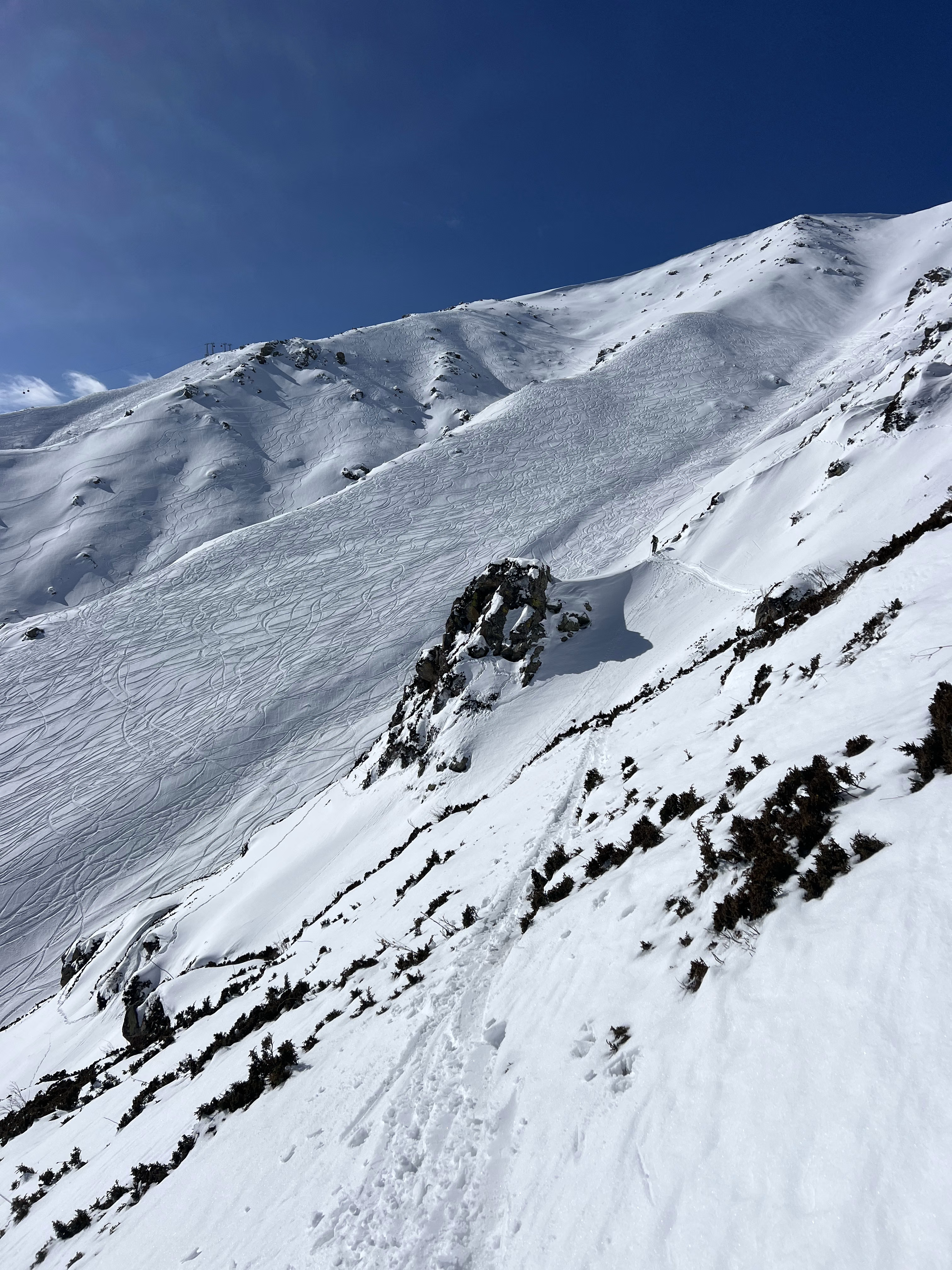
The storms arrive from the west, often stacking up in cycles through January and February. Because the resort sits high and the winter air mass over Kashmir is cold, the snow lands light. After a metre-plus storm clears, you get something rare in the modern ski world: enormous lift-served terrain, blower snow, and a few hundred skiers at most spread across a face that could swallow ten thousand.
Fresh tracks last for days here, not hours. We've guided guests to untouched lines four days after a storm, five minutes' traverse from the gondola. That's not a marketing claim; it's a normal Tuesday, and it's the single thing that keeps people coming back winter after winter.
The flip side: nothing is groomed up high, so between storms you're skiing chalk, wind effect, and sun crust, and reading the snow matters. This is where local knowledge stops being a luxury.
Freeride terrain: the lay of the land
From the Phase 2 top station at about 3,980 m, the ridge of Apharwat runs in both directions, and everything below it is skiable in the right conditions.
The main bowls. Straight off the top station, wide open faces drop back toward Kongdoori. Around 900 vertical metres, sustained but not extreme pitch, and the natural first stop on anyone's first Phase 2 day. On a powder morning these bowls are as good as open skiing gets anywhere.
Mary's Shoulder. A short hike or traverse from the top station along the ridge. Steeper rolls, wind-loaded pockets, and consistently some of the best-protected snow on the mountain. It's also a place that demands respect: the same loading that keeps the snow soft builds slabs.
The summit ridge and beyond. Hike higher toward Apharwat Peak (about 4,200 m) and lines open toward steeper gullies and shoulders. The bootpack takes 30 to 60 minutes depending on snow and fitness, and at this altitude you feel every step. The reward is the steepest, longest lift-accessed skiing in the region.
The tree runs. When storms shut Phase 2 or visibility drops, the forest saves the day. From Kongdoori, runs drop through old-growth pine toward Babarishi and beyond toward Drang village at roughly 2,100 m. On the biggest days, top station to Drang is around 1,800 vertical metres of continuous skiing, finishing with kahwa in a village and a taxi back up. It's one of the great runs of the skiing world and hardly anyone outside Kashmir has heard of it.
Trees here deserve their own caution: the forest is unmarked, gullies and streambeds funnel you into terrain traps, and it's genuinely easy to get lost. This is the zone where guides earn their keep even on low-danger days, purely on navigation.
Backcountry skiing and ski touring
The lifts are the doorway, not the whole house. Strap on skins and the Pir Panjal opens up.
Popular touring objectives from Gulmarg include the far shoulders of Apharwat beyond the lift ridge, the bowls and forests toward Khilanmarg on quieter aspects, and multi-day options deeper into the range for experienced parties. In March, when the snowpack settles and days lengthen, touring becomes the best skiing in Kashmir: corn cycles on sunny faces, preserved powder in shaded gullies, and total solitude.
What touring here demands:
- Full avalanche kit and the training to use it. Non-negotiable, for every party member.
- Acclimatisation. Skinning at 3,500 m+ two days after leaving sea level is miserable and slow. Give yourself easier lift days first.
- Navigation redundancy. Weather changes fast, and a whiteout on a featureless Himalayan shoulder with a phone at 4% battery is a bad plan. We carry paper maps and GPS both.
- A guide, unless your party has genuine Himalayan or big-range experience. Not because the skinning is technical, but because route selection in this snowpack is the entire game.
What a guided powder day looks like
People ask what they're actually paying for, which is fair. Here's a typical day with us after a storm:
We check the avalanche advisory and our own observations from the day before, and pick a plan plus a backup before you've finished breakfast. First gondola. On the ride up we talk through the snowpack: what fell, what the wind did, what we're avoiding today and why.
First run is somewhere we trust: a moderate line that lets us feel the new snow and watch how you ski. Then we escalate to match the group: deeper, steeper, or over to a different aspect where the snow's better. We handle spacing, regrouping points, and all the invisible decisions. You handle skiing.
Lunch is maggi and kahwa at Kongdoori, or if the day's gone right, in Drang after the long run, waiting for the taxi with stupid grins all round.
Group sizes stay small, usually four to six guests per guide, because that's the number we can actually watch on a big face.
Honest talk about ability level
You do not need to be a pro. You do need to ski parallel confidently on ungroomed snow and be fit enough for 900 m descents at altitude with some traversing and the occasional bootpack.
If your off-piste experience is a few powder days at a Western resort, you'll be fine in the main bowls with a guide, and this trip will probably recalibrate your idea of what skiing is. If you've never skied ungroomed snow, spend your trip on Phase 1 and the tree-line terrain first; our lessons page explains that progression. The mountain will still be here next winter.
Frequently asked questions
Do I need a guide to ski off-piste in Gulmarg?
For the upper mountain and trees, yes. Legally you can ride the gondola and drop in anywhere, which is exactly why people get into trouble. No patrol controls this terrain. A guide is the difference between skiing the mountain and gambling on it.
How hard is the skiing off Phase 2?
The main bowls are advanced-intermediate in good snow: sustained, open, and forgiving of speed. Mary's Shoulder and the summit hikes step up to genuinely advanced. The tree runs vary from mellow to tight and technical.
What's the best month for powder in Gulmarg?
January and February. January tends to be coldest with the driest snow; February usually has the deepest base and slightly friendlier weather. March is for touring and corn.
Can snowboarders do the Drang run?
Yes, and it's superb on a board, with a couple of flat sections where knowing the fast line matters. Our guides set traverses with boarders in mind.
Is heliskiing available in Gulmarg?
Operations have run in some seasons and paused in others. Ask us about the current winter. Honestly, with the gondola and skins you can reach world-class terrain without a helicopter budget.