Avalanche awareness and mountain safety in Gulmarg
Written by our senior guides. We've done formal avalanche training, we dig pits and log observations through every season, and we've taken part in rescues on this mountain. This page is blunt in places. It's meant to be.
Gulmarg's upper mountain is uncontrolled avalanche terrain with lift access. That combination is what makes the skiing extraordinary, and it's also what makes this the most important page on our site. People have died on Apharwat, including experienced skiers. Almost every incident traces back to the same thing: treating a wild Himalayan mountain like a managed resort because a gondola happens to run up it.
You don't need to be afraid of Gulmarg. You need to understand it. Here's what that means in practice.
How safety actually works here
At a European or North American resort, patrol controls avalanche terrain before opening, marks hazards, sweeps runs at close, and reaches injured skiers in minutes. In Gulmarg, that system exists only in a limited form.
There is avalanche control work around the gondola line and the most-used zones near the lift, and Phase 2 stays shut until that work is done after storms. There is an official avalanche advisory for the area, published through the snow safety operation, rating danger and describing the problems of the day. Both are valuable and we use them every morning.
But the moment you ski away from the immediate lift corridor, you're in unpatrolled terrain. Nobody marked it, nobody controlled it, and nobody sweeps it at 4 pm to check you got down. The trees toward Drang, the far bowls, Mary's Shoulder, the summit lines: all of it is functionally backcountry that happens to start at a gondola station.
Rescue reflects this. There's no patrol toboggan arriving in eight minutes. A response involves guides in the area, the gondola crew, local authorities, and in serious cases evacuation to Srinagar, an hour and a half away by road in good conditions. Companion rescue, your own group digging you out within minutes, is the plan. Everything else is too slow. That single fact drives every rule below.
The Gulmarg snowpack
Every mountain range has a snowpack personality. Gulmarg's, in plain language:
Storms arrive in cycles from the west and load the mountain fast, a metre or more in a day or two. Immediately after and during these storms, danger spikes: storm slabs and wind slabs form, especially on loaded aspects near the ridgeline, and this is when the mountain is at its most dangerous and, cruelly, its most tempting.
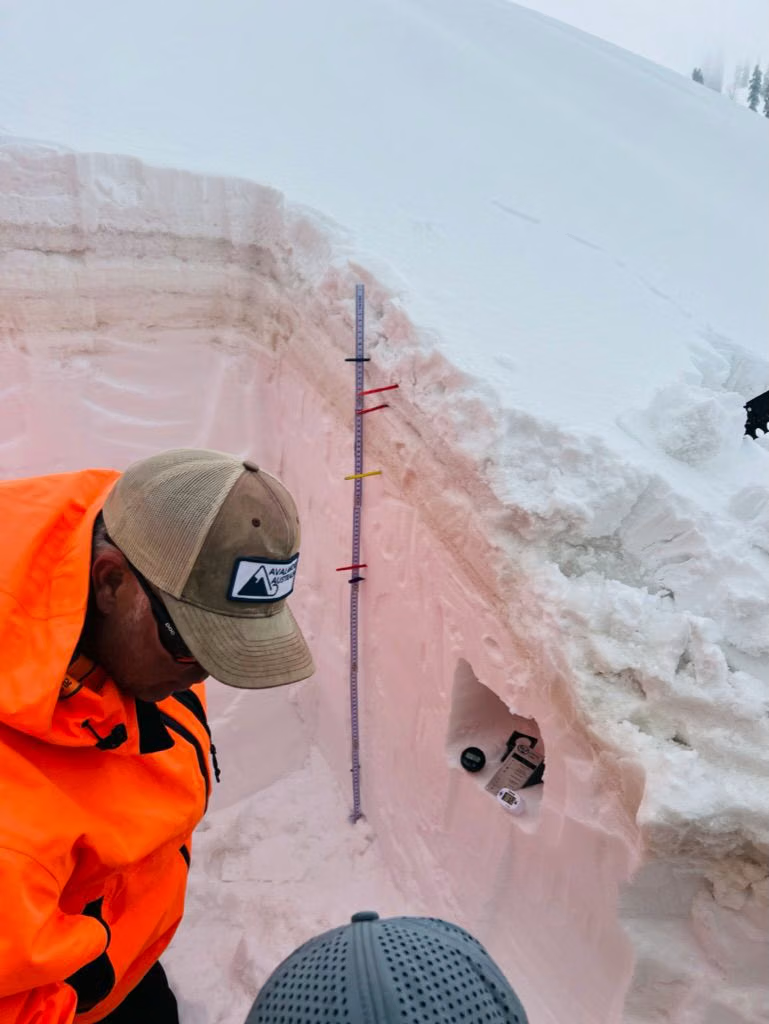
Between storms, long clear cold spells work on the snow. Persistent weak layers can form and get buried by the next cycle, creating the kind of deep instability that doesn't announce itself. Slopes can be skied by twenty people and release under the twenty-first. This is the trap that catches experienced skiers, because the snow "felt fine."
Wind is the third character. The Apharwat ridge gets scoured and cross-loaded constantly, so two slopes a hundred metres apart can hold completely different hazards.
None of this makes Gulmarg uniquely dangerous among big mountains. It makes it a place where local, current knowledge of what's buried in the snowpack is worth more than general skill. That knowledge is the core of what guiding here is.
The rules our guides live by
These aren't marketing. They're the actual operating rules on our guided days, and the ones we'd urge on any independent party.
- Beacon, shovel, probe on every person, every day, above the mid station or in the trees. Worn and switched on, not in a bag in the hotel. We run a beacon check at the start of each day, no exceptions, no embarrassment.
- Read the advisory, then verify it with your own eyes. The bulletin describes the pattern; the slope in front of you is the fact. We dig, we probe, we watch how the snow behaves under our skis on low-consequence ground before committing to bigger lines.
- One at a time on committing slopes. Ski from safe zone to safe zone. Watch your partner the whole way. It's slower and it's non-negotiable.
- The mountain decides the plan. Every day has a plan A and a plan B, and stepping down to B (or to lunch) is a normal outcome, not a failure. The best skiers we know are the ones most comfortable turning around.
- Storm days are tree days or rest days. The bowls will still be there tomorrow, with better snow and a settling snowpack.
- Know where you are. The forest funnels into gullies and streambeds, classic terrain traps, and it's easy to drift out of any sensible line. Offline maps, and a guide who's skied it a hundred times, solve a problem you don't want to discover you have at 4 pm.
If you take a guided day with us, all of this happens around you and mostly invisibly. If you ski independently, this list is the job description you're accepting.
Altitude, cold and the other hazards
Avalanches get the headlines, but most trips that go wrong here go wrong in ordinary ways.
Altitude. You sleep at 2,650 m and ski to nearly 4,000 m, often days after leaving sea level. Headaches, poor sleep and heavy legs are common in the first 48 hours. The fix is boring: arrive a day early, drink water, ski moderately at first, skip the first-night party. Anything worse than a mild headache, descend and rest; genuine altitude sickness at these elevations is uncommon but real.
Cold. January days run well below freezing before wind, and the top station in a gale is brutally cold. Frostnip on cheeks and noses is the most common injury we see. Cover your face up high, carry spare gloves, and go inside when you stop feeling your toes rather than after.
Whiteouts. Flat light on Apharwat's featureless upper slopes erases the world. Up and down become guesses. If visibility drops, the move is the trees or the gondola, immediately, not "one more run."
Ordinary injuries. A wrenched knee that's an inconvenience in the Alps is a logistics problem here. Medical facilities in Gulmarg are basic; real treatment means Srinagar. Which is why we repeat, tediously, on every page: carry insurance that covers off-piste skiing and evacuation, and keep a copy of the policy where your companions can find it.
Training worth doing before you come
You don't need formal training to ski Gulmarg with a guide; that's what we're for. But if the mountains are going to be part of your life, do a recognised avalanche course at home (AIARE, AST, or a national equivalent), and practise with your beacon until finding a buried target takes you under three minutes. Guests who arrive with that background get more out of the mountain, ask better questions, and make our days easier.
At minimum, watch a companion-rescue video the week before your trip and read the current Gulmarg advisory each morning you're here. Twenty minutes of homework, meaningful difference.
Frequently asked questions
Is skiing in Gulmarg safe?
On the meadow and marked lower runs, it's as safe as skiing anywhere. The upper mountain is serious avalanche terrain, and it's as safe as the decisions made on it. With a competent guide, proper equipment and conservative habits, thousands of skiers enjoy it without incident every winter.
Is there an avalanche forecast for Gulmarg?
Yes, an advisory is published for the area during the season, rating danger and describing current problems. We read it every morning and calibrate it against our own observations. Independent skiers should do the same.
Can I ski Phase 2 without avalanche gear?
You physically can, which is the problem. Nobody at the gondola checks. Don't. Every person in a group needs a beacon, shovel and probe, and the ability to use them, anywhere beyond the controlled corridor.
What happens if someone is injured on the mountain?
Response is slower than at Western resorts: guides and gondola staff coordinate evacuation, and serious cases go to Srinagar by road. This is why guided groups carry rescue equipment and first aid, and why insurance with evacuation cover is essential.
Do your guided days include safety equipment?
Yes. Beacon, shovel and probe for every guest, a morning beacon check and briefing, and guides who carry first aid and manage terrain choices all day. Details on our powder and freeride page.